The short answerLi, Ld and La describe different reference paths around a V-belt. A length value becomes useful only when its reference, unit and belt section are known. Comparing the numbers alone can produce the wrong replacement.
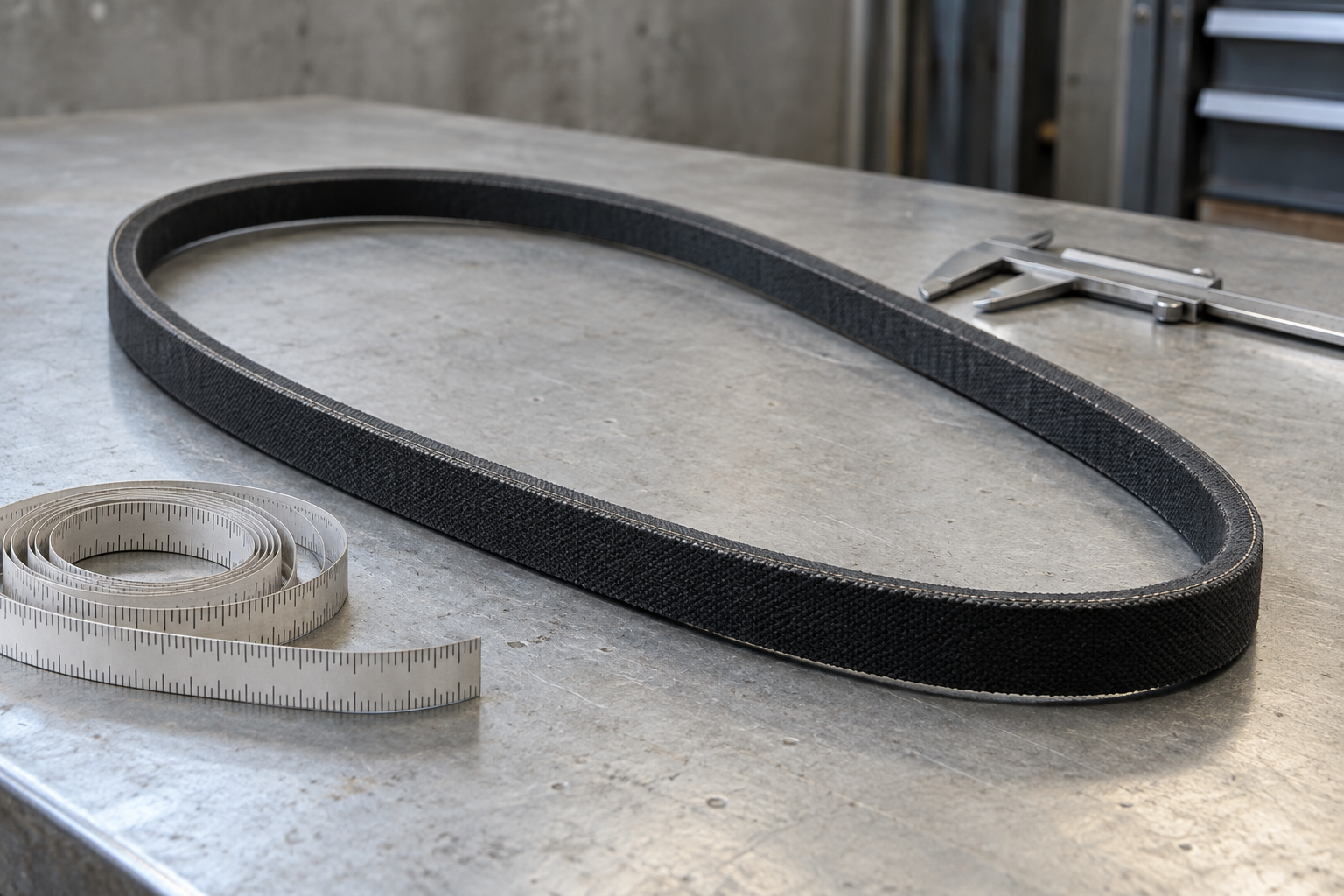
“The old belt is about one metre long” is a starting observation, not a part number. A belt has thickness, and the path around its inside is shorter than the path around its outside. Manufacturers also use defined reference systems to specify a belt consistently.
Read the length reference first
| Marking | What it describes | How to use it |
|---|
| Li | Inside length. | Keep the value with its Li designation; do not compare it directly with an outside length. |
| Ld | Datum length under the applicable reference system. | Use the section-specific manufacturer data and the exact designation. |
| La | Outside length. | A tape around the outer surface is an observation of this surface, not automatically the catalogue’s controlled measurement. |
| Other labels | Effective, pitch or manufacturer-specific references may appear. | Check the definition in that product catalogue; do not rename all reference lengths “Ld”. |
Length notation should be interpreted with the applicable product standard and manufacturer catalogue.
Inside, datum and outside lengths describe different geometric references. The practical point is that conversions depend on the belt family and reference geometry. There is no single correction to add to every V-belt.
One belt · different reference paths
Liinside path
Lddatum reference
Laoutside path
Reference-path concept only. This is not a measurement fixture or a conversion chart.
Why an outside tape reading can mislead
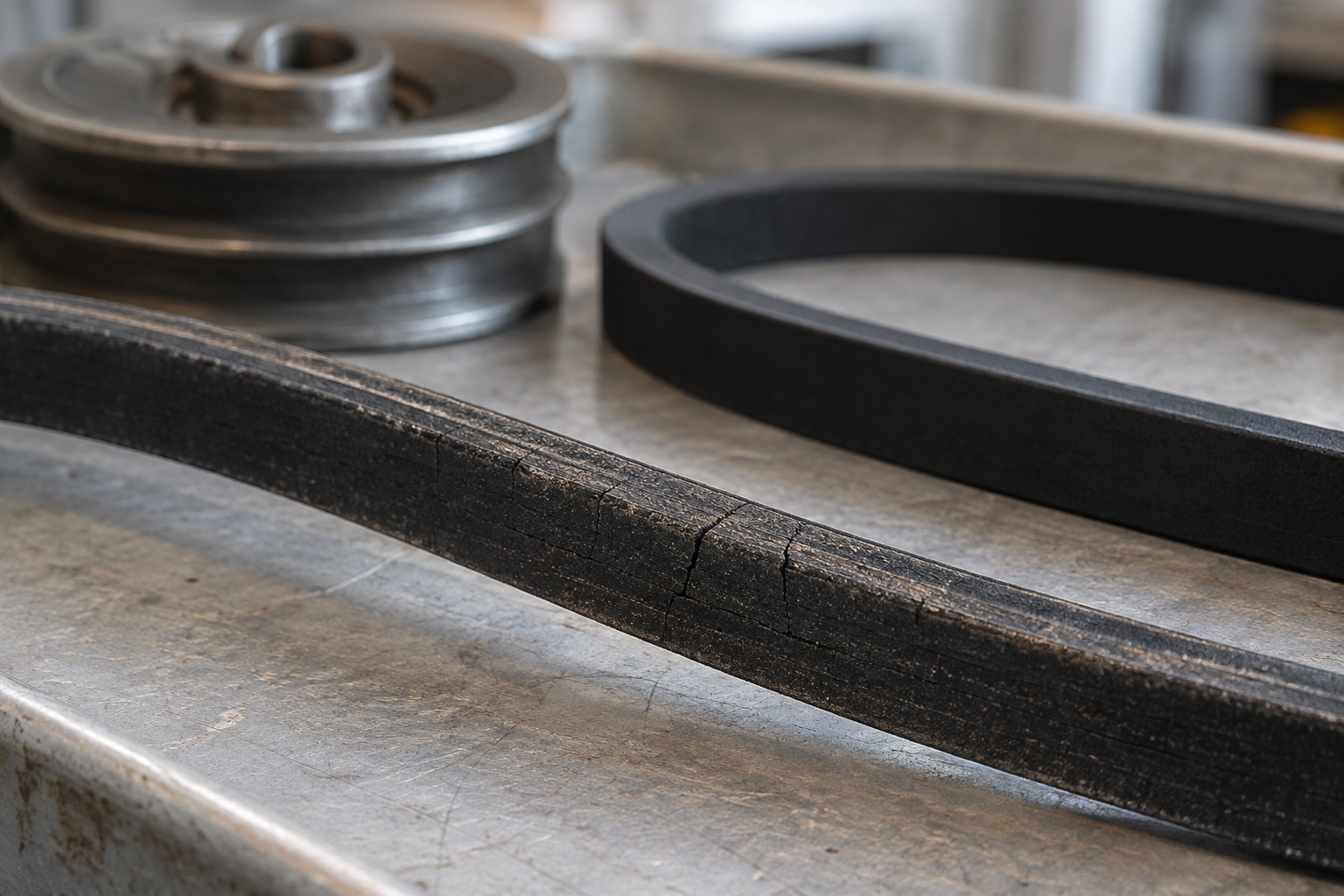
A tape follows the surface you put it against. It does not establish the datum system. A worn belt may also have changed dimensions and lost part of its original cross-section. The reading can help narrow a search, but it cannot recover every missing element of the marking.
Think of two concentric circles as a geometric illustration. If their radii differ by 3 mm, their circumferences differ by 2π × 3, approximately 18.8 mm. A V-belt is not being specified by this simple circle calculation: the example only shows why measurement paths separated by a small distance can produce noticeably different lengths.
A comparison that stops a wrong order
Worked example · illustrativeBoth quotations say “1000 mm”
One quotation states a specified section at 1000 Li. Another states the same nominal section at 1000 Ld. The buyer cannot conclude that they are equal or that the difference falls within tolerance: the two suppliers are describing different references.
The correct next comparison uses a common, manufacturer-defined reference. If the released requirement is 1000 Ld, the alternative supplier must identify the exact proposed belt and its corresponding datum length. An undocumented number converted from a worn sample is not the same evidence.
Read the complete marking as a sentence
Separate the profile, numerical length, reference suffix, unit system and any construction suffix. Keep brand and full part reference where available, because the numbering convention can be specific to a product range. A compact stock label is useful only if the complete identity remains recoverable.
For a multi-belt drive, also record whether quantity means individual belts or a complete set. Length identity and set compatibility are related questions, but a correct length designation alone does not close the set requirement.
When the marking is unreadable
Provide the equipment reference, remaining visible characters, measured top width and height, and an approximate length with the measurement method stated. Add a photograph showing the belt section. This distinguishes observed evidence from a confirmed part definition and gives the technical reviewer something reproducible to work with.
The useful outcome is a complete replacement designation—not a more precise guess at an unexplained length number. Once that designation is approved, retain it for the next order.