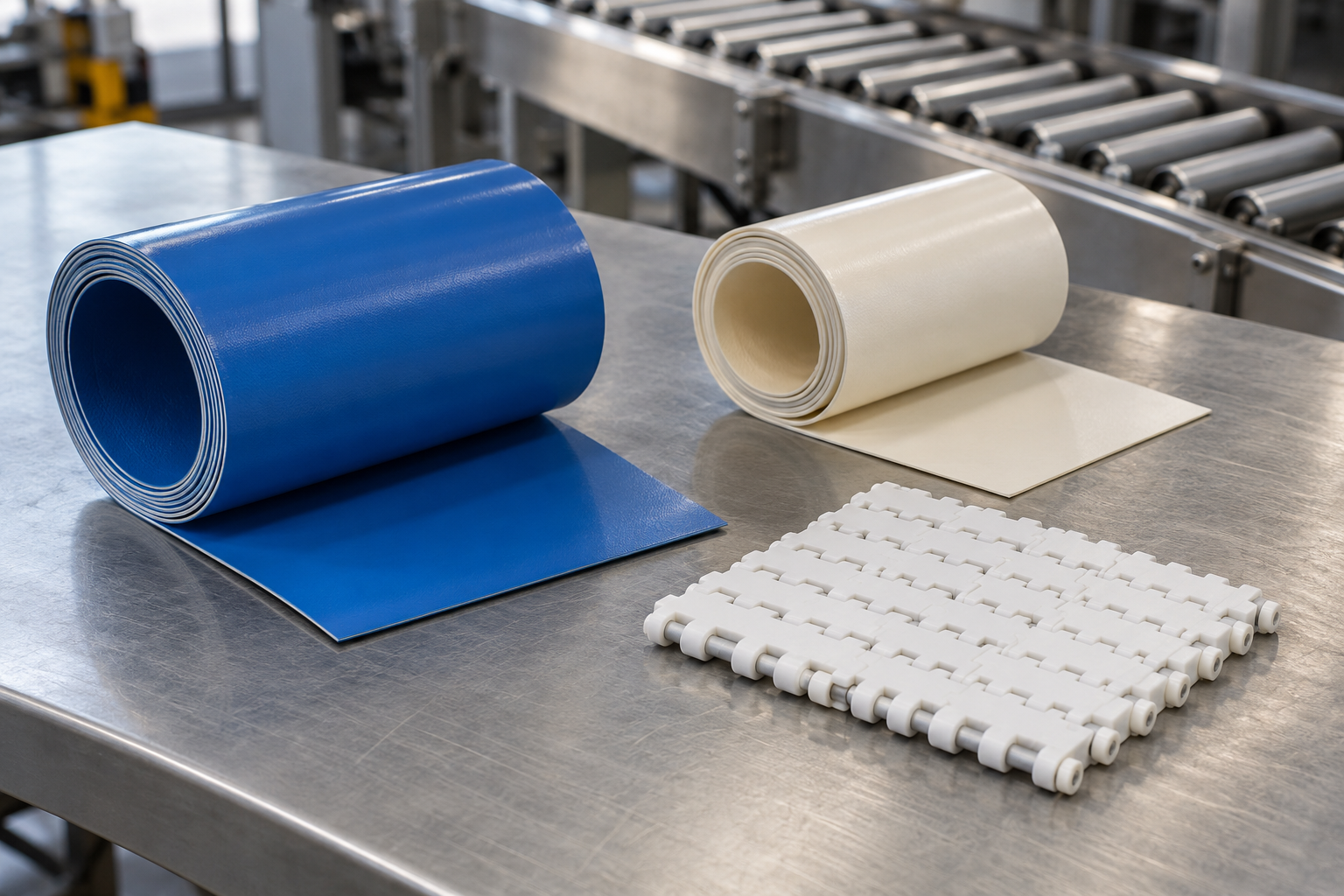
The short answerPVC and PU describe coating materials; modular describes a belt construction. Start with the product’s path, transfer geometry and cleaning conditions. Comparing the names as three interchangeable grades of quality leaves the conveyor itself out of the decision.
A small packaged item crossing a narrow transfer, loose material on an incline and a wet process do not present the same problem. The belt surface is important, but so are the support, drive and return arrangements underneath it.
Separate coating from construction
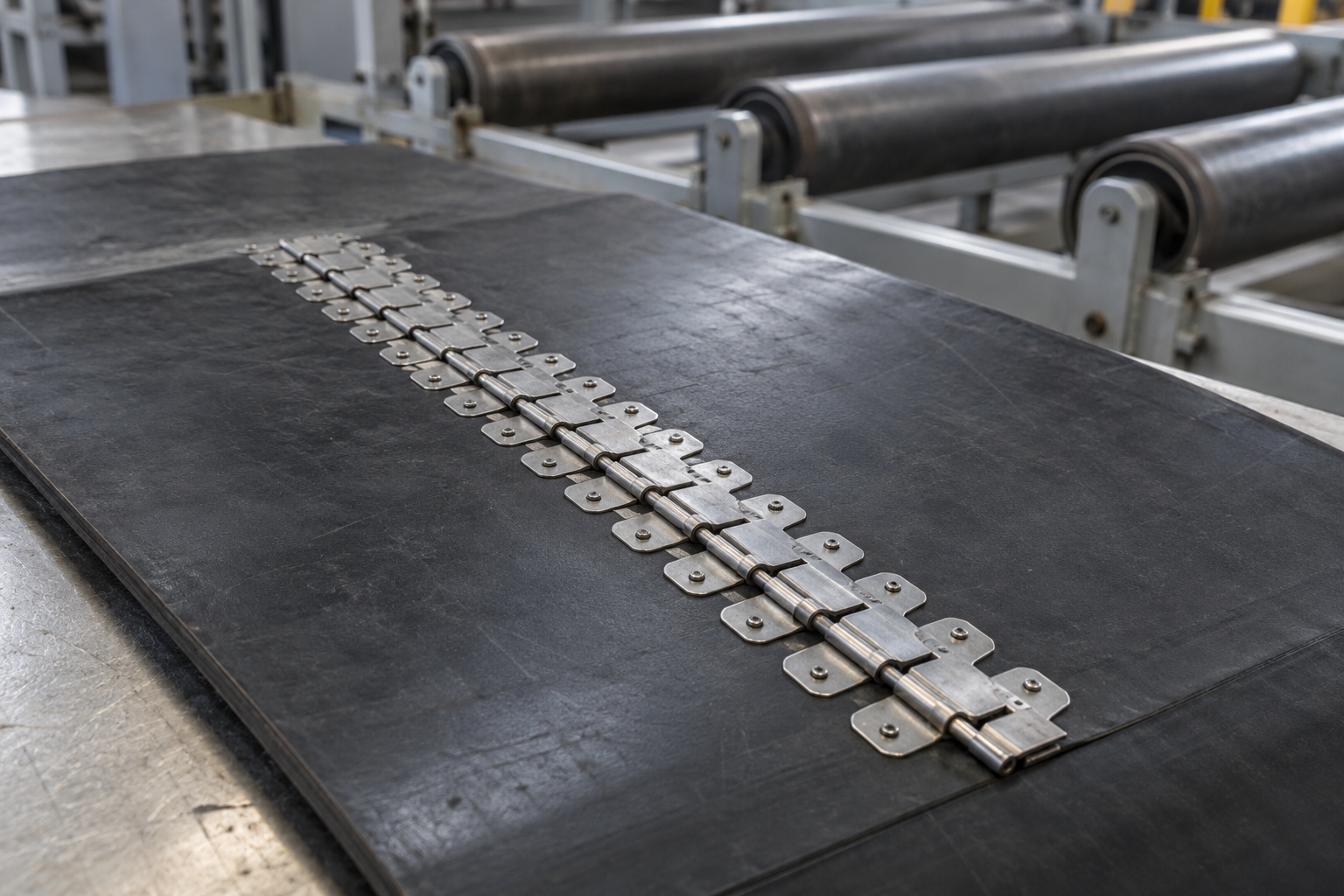
A fabric-based conveyor belt combines a carcass with a working surface. PVC or PU may describe that coating, but not every other feature of the belt. A plastic modular belt uses linked modules and a corresponding drive arrangement. Its material, pitch and surface design must also be identified.
Evaluate material, construction, chemical resistance and drive arrangement together. Compare complete candidate systems instead of selecting a polymer name first and assuming the rest will follow.
| Application question | Fabric belt with PVC or PU coating | Plastic modular belt |
|---|
| Small product at a transfer | Check the exact belt’s minimum pulley or nosebar requirement and joint suitability. | Check module pitch, transfer gap, sprocket geometry and any transfer device. |
| Product release or grip | Select the surface finish for the product and process. | Select surface geometry and material for the product and process. |
| Cleaning | Review coating, fabric edges, joint and attachments against the actual cleaning regime. | Review modules, pins, hinges and conveyor access against the same regime. |
| Changing the belt system | Retain compatibility with the existing drive and supports. | A conversion may require sprockets, supports, return layout and space changes. |
This compares design questions, not universal performance rankings for PVC, PU or modular products.
Watch the transfer before judging the belt
The useful observation is what the smallest or least stable product does at the transfer. Does it bridge the gap, tip, snag or lose its orientation? Record the product dimensions and the transfer geometry together. “The belt runs well” does not answer whether the product transfers well.
Worked example · illustrativeA conveyor carrying small cartons
Imagine a line carrying cartons with a 60 mm footprint in the direction of travel. A proposed replacement would also alter the transfer gap. Before comparing belt prices, draw the carton crossing that gap and assess support through the transfer.
The 60 mm figure does not define a universal permitted gap. It identifies the product geometry that must be assessed. The right trial checks the least stable carton and the actual running conditions, rather than a convenient larger test pack.
Cleaning compatibility needs conditions
A cleaner’s name alone is not an exposure specification. Concentration, temperature, contact time and cleaning frequency affect the review. Include the joint and any cleats or edge sealing; a compatible top surface does not establish compatibility of the entire fabricated belt.
If food contact is intended, request documentation for the proposed product, material and colour under the applicable use conditions. The declaration must match the specific material and colour being supplied. Neither “PU” nor “plastic” is a universal food-contact approval.
Make the shortlist around the constraint
If the transfer is the limiting feature, begin there. If cleaning access is the limiting feature, compare how the complete conveyor can be cleaned. If product release is poor, examine the product/surface interaction. This makes a trial test a defined problem rather than a vague promise of “better belting”.
The result may be a different surface within the existing belt system, or a broader conveyor redesign. Those are different scopes of work and should be evaluated as such.