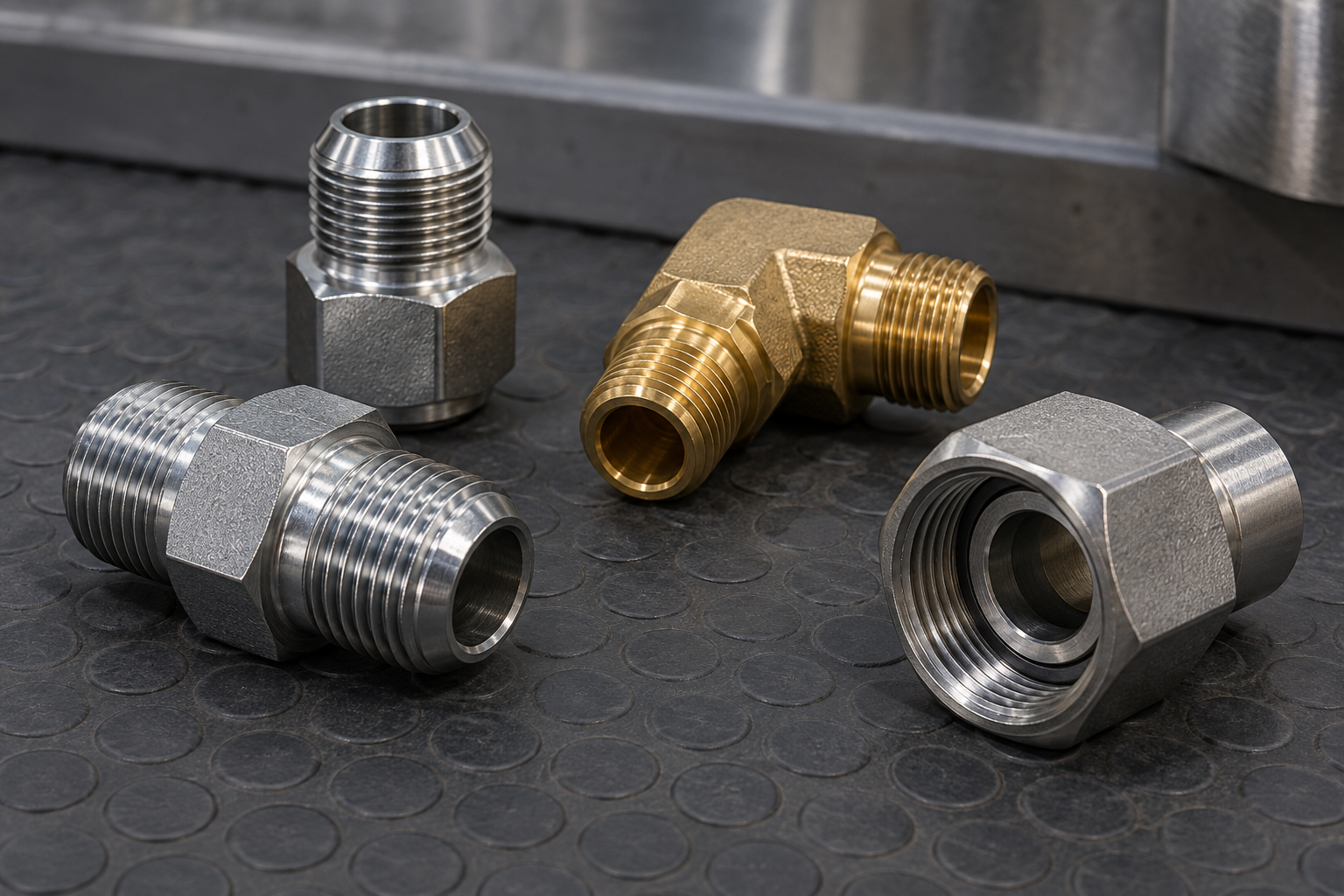
The short answerBSPP is parallel; BSPT and NPT are tapered. BSP and NPT also differ in thread geometry. Nominal size, visual similarity or a few turns of engagement cannot establish a compatible, pressure-tight connection.
“Half-inch pipe thread” does not identify a hydraulic connection completely. It omits the thread family and, in many cases, the sealing arrangement. The most reliable identification separates thread form, pitch, size and seal instead of trying to decide from one photograph.
Start with the family
| Feature | BSPP | BSPT | NPT |
|---|
| Basic form | Parallel | Tapered | Tapered |
| Included thread angle | 55° | 55° | 60° |
| Typical pressure-seal concept | A separate sealing interface; identify the actual design. | Thread-based sealing in the correctly specified mating connection. | Thread-based sealing with the specified mating connection and assembly method. |
| Can diameter alone identify it? | No. | No. | No. |
This is an identification overview, not a fitting interchangeability or assembly instruction.
A reliable identification procedure checks taper or parallel form, pitch, size and the complete connection designation. The sealing feature remains another part of the connection definition.
A useful pitch check—and its limitation
A nominal 1/4-inch BSP pipe thread has 19 threads per inch, while the corresponding NPT size has 18. That difference can help rule out an incorrect identification. At nominal 1/2 inch, both families use 14 threads per inch, so pitch alone no longer separates them.
Worked example · illustrativeBoth samples have 14 threads per inch
A technician finds a tapered male fitting and measures 14 threads per inch. That evidence does not establish whether the fitting is nominal 1/2-inch BSPT or NPT.
The next step is to compare the remaining geometry and the complete reference using suitable identification information or gauges. Trying to make it fit with more torque is not an identification method and can damage the connection.
Identify the pressure seal
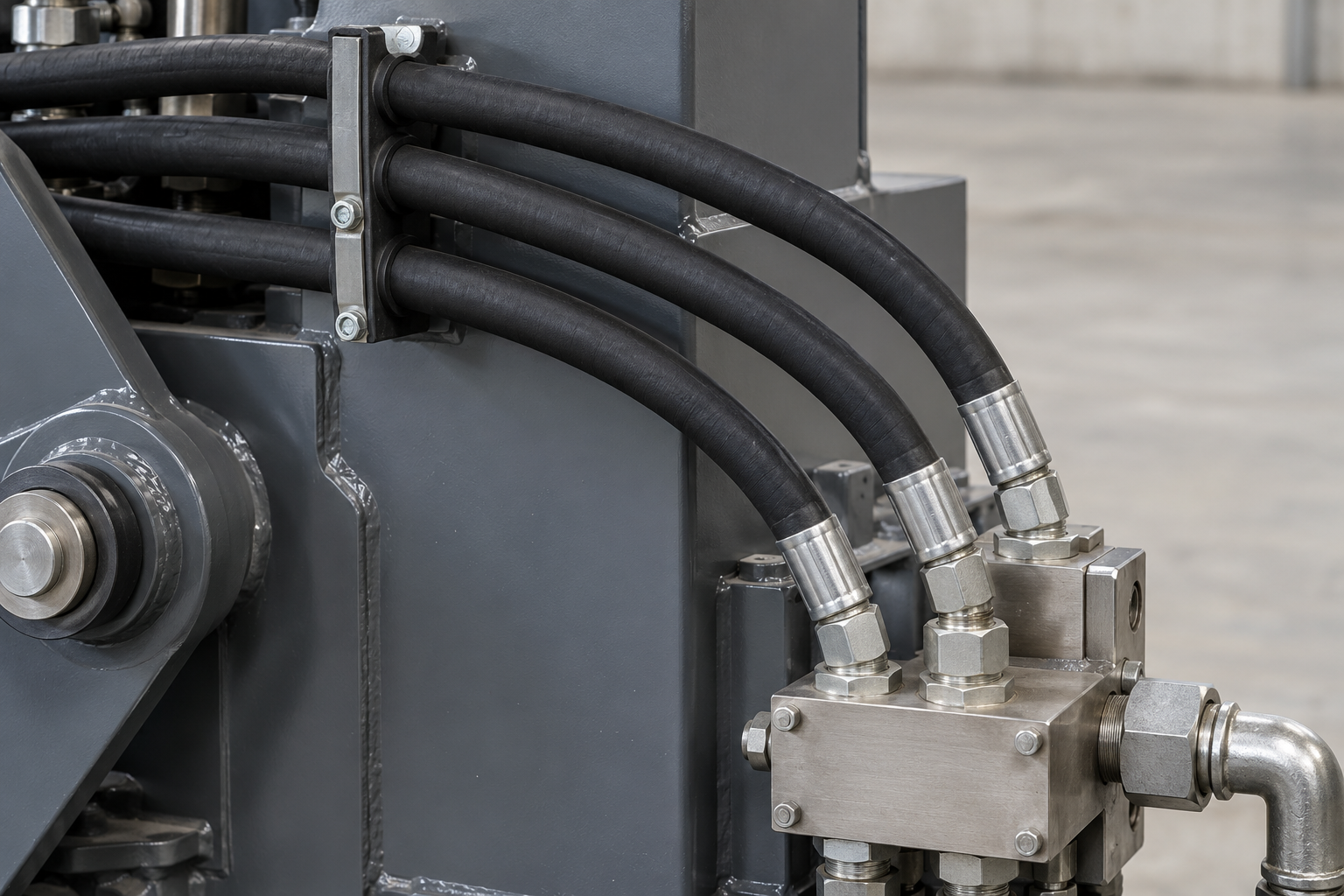
On a parallel connection, the thread may provide retention while a face, cone, washer or elastomeric interface provides the seal. Identifying only the parallel thread leaves that interface unresolved. Two parts can share a nominal thread designation while belonging to different sealing arrangements.
Photograph the seat or face as well as the thread. If a washer or O-ring is present, preserve its identity in the technical record. Do not treat a missing sealing element as a reason to change the connection concept.
Read an adapter as two separate connections
Label the ends A and B. For each end, record gender, thread family, nominal size, sealing form and angle where relevant. Keep orientation and clearance dimensions on an assembly drawing. This prevents an enquiry from describing only the end that happened to be photographed clearly.
A suitable identification record might state that end A is confirmed from a drawing, while end B still needs a seat measurement. Keeping that uncertainty visible is more useful than attaching a confident but incomplete “BSP adapter” label.
Where identification ends
After the part is identified, material, seal compatibility, pressure rating and installation requirements still need review for the actual application. Identification does not supply a generic torque value or authorise a mixed connection. Work on depressurised equipment using the responsible technical team’s procedures.